Is Allama Iqbal relevant in today’s politics?
In our national conscience, Sir Allama Muhammad Iqbal occupies that lofty post of being the first person to have conceived the idea of Pakistan. The second thing that we know about him is that he wanted an Islamic Pakistan. Nobody has ever bothered to go beyond this simple fact to ascertain the reasons for this, and it is noteworthy that mostly we have only read about the part where he supports the idea of a separate homeland for Muslims. The official narrative has erased Iqbal’s advocacy of a unified India and presents only his later ideas. The point of this article is ...
Read Full PostDastaan: History on TV
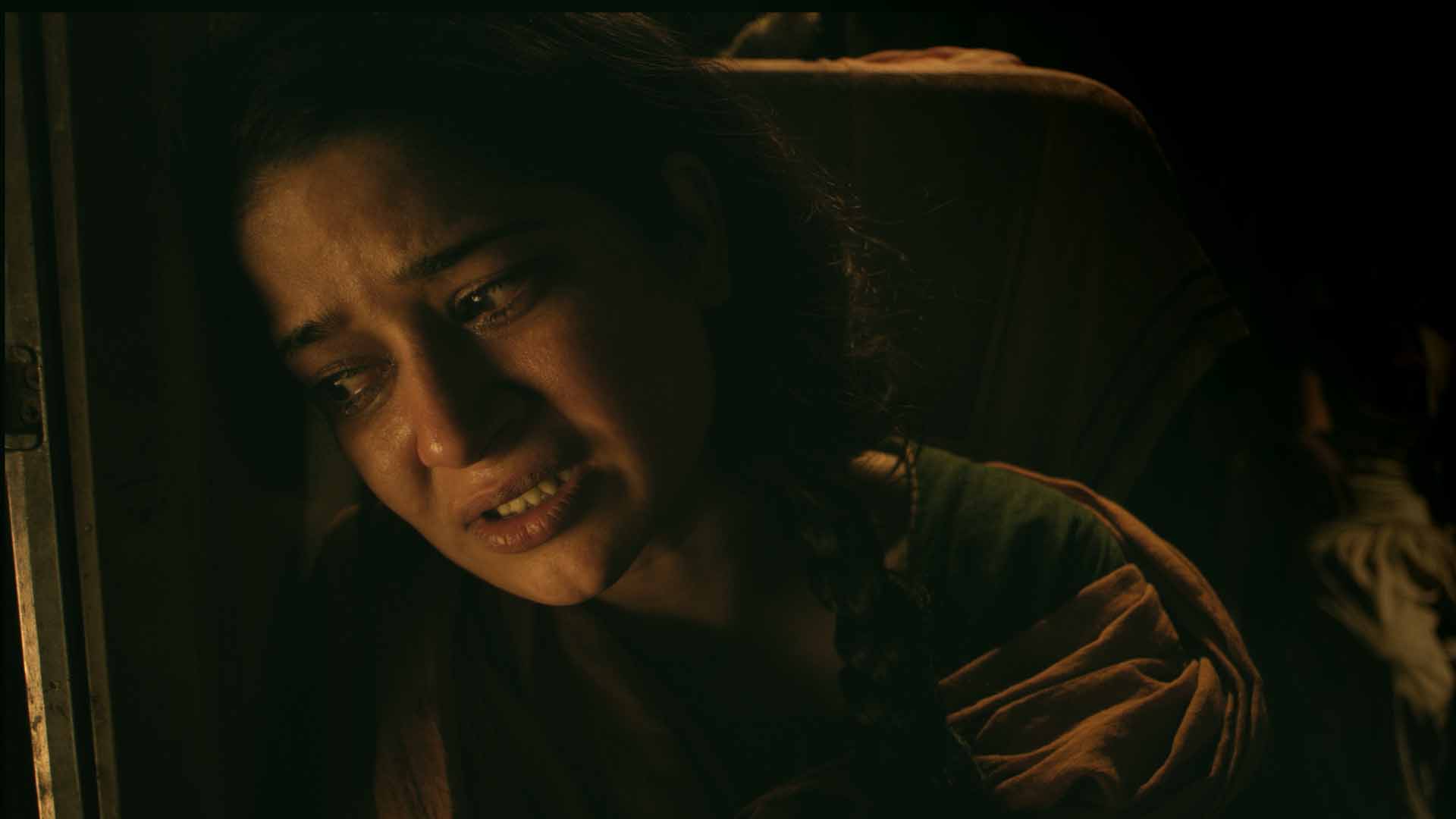
Dastaan, a Hum TV production, is probably the most gripping modern day ode to the beauty and simplicity of pre-partition life. Written by Razia Butt, Dastaan depicts the love story of Hasan (Fawad Khan) and Bano (Sanam Baloch) – a romance which is shred to pieces by the gruesome and gory separation of 1947. The drama starts off as a tender series of events between the couple, but later morphs into a saga full of blood, greed and lust. This turn of events hurls Bano, the quintessential Pakistani girl, into the arms of madness, because she is devastated by the ...
Read Full PostOvercoming our colonial legacy
On August 12, Pakistan finally came to grips with its colonial legacy. The Frontier Crimes Regulation (FCR), a draconian law framed by British to govern the ‘unruly tribal areas’ on the border with Afghanistan has finally been scrapped. The British viewed the frontier regions as a buffer zone for the empire, beyond which lay the territories of Afghanistan. The frontier tribes were never brought under complete suzerainty of Britain, although indirect rule was exercised through tribal chiefs and intermediaries. The Pashtuns, historically allergic to foreign occupation offered strong resistance to the British. Thus naturally, the brutes and savages had to be ...
Read Full PostPakistan: ‘We carved a truth out of the game of lies’
Today is August 14, 2011. An overwhelming majority of Pakistan and India whose minds have been indoctrinated by state-sponsored-distorted text books of history are celebrating the day as “the 64th freedom day” but this red letter day stings my heart when I hear the account of history from my elders. These people are not ready to agree with the historical background presented by Chaudhry Mohammad Ali in his book The Emergence of Pakistan. While presenting the logic behind the differences between Hindus and Muslims which led to the severance of India Ch. Mohammad Ali writes: “They have mixed but never fused: they ...
Read Full PostIqbal: Beyond poetic catchphrases
Yesterday was the death anniversary of one of Pakistan’s prominent national heroes, philosopher and poet Allama Muhammad Iqbal. Dr Riffat Hassan wrote a wonderful piece on how Iqbal’s ideology and message has been excluded from national discourse. I would like to echo that sentiment; today’s generation feels no connection to Iqbal’s ideas. Every once in a while, I see a couple of his lines on someone’s Facebook status but that’s about it. Pakistanis know nothing of the man beyond a few catchphrases. His ideas are important to understand, question and reflect on, because we have all grown up in an environment ...
Read Full PostPakistan ka matlab kya…who cares?
Six odd decades after independence, we are still squabbling over the ideology of Pakistan, what it represents and what it means to be a Pakistani. With the rise of social media and greater access to information, the urban youth are starting to challenge the official narrative of history. And hence, today the battle of the ideology of Pakistan is in full swing. To me, Pakistan is an undeniable truth, much like Israel. Pakistan is a sovereign country – whether one agrees with the original ideology it is based upon is irrelevant. Like Israel, Pakistan is on the map and must ...
Read Full Post1947: A teenager’s memories of Independence
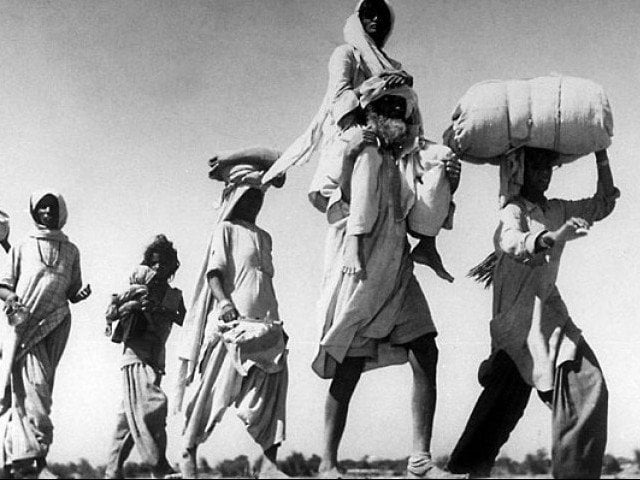
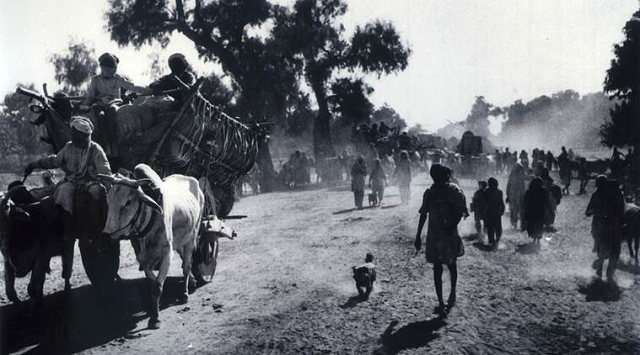
After all these years I can still smell the stench of death and half burnt timber. I still see mountains of rubble as if it was August 1947 in Lahore. I was 13 years old, tense and worried. I could see columns of smoke rising over the city’s rooftops. Speculations were ripe. They said Lahore was going to be a part of Pakistan but the inclusion of Gurdaspur, the area where my relatives lived, was doubtful. I did not know what would happen to the rest of the Muslims all over India. My own relatives lived in East Punjab, and I anxiously ...
Read Full PostPakistan (Studies) Zindabad!
“You know what really bothers me about India? Not their stupid ‘Incredible India’ slogan or their weird item songs or that ‘Licence to wear Black’ ad,” says a friend during Pakistan Studies class one day. “The Taj Mahal! Everybody wants to see it. It’s on every postcard. Even that stupid French guy wants to see it. It’s the first thing everyone wants to see!” When I ask why she’s bothered by the Taj Mahal, her answer is simple: “Because it’s really ours.” That is, Pakistan’s. Five years of Pakistan Studies class, hours of learning dates and battle names, of revising lists ...
Read Full PostThe problem with Balochistan
If I endeavor to draw a parallel between East Pakistan and Balochistan I’m sure it would be a well-founded one. The way the central government has continued to deny Balochis their rights it’s not too difficult to see how similar the situation is to that of East Pakistan. While all disturbances and revolts are attributed to ‘foreign’ hands’, the centre never ventures to ponder on what makes Balochistan a hotbed for such anarchy. A very fleeting look instantly reveals that it has been an acute state of injustice, provincial inequality and continuous military repression that has pushed Pakistan’s largest province to the brink of ...
Read Full PostAn alienating identity
The cold-blooded murder of Baloch nationalist Habib Jalib, suicide attacks on Ali Hajveri’s shrine and last month’s brazen strikes on the Ahmedi places of worship in Lahore are three seemingly separate incidents. Yet they point to a harsh reality that we have to live with - there is no room for dissent in the Islamic Republic of Pakistan. Dissenters, whether religious or on other important questions that challenge the hegemony of the small Punjabi-dominated establishment, get exterminated at will. Groups like Khatam-e-Nabuwat and Jammat-Ahle-Sunnat (an offshoot of the banned Sipah-e-Sahaba) openly issue statements condemning Ahmadis and Barelvis respectively, guarding their narrowed and ...
Read Full Post