5 steps to solving Pakistan’s energy crisis
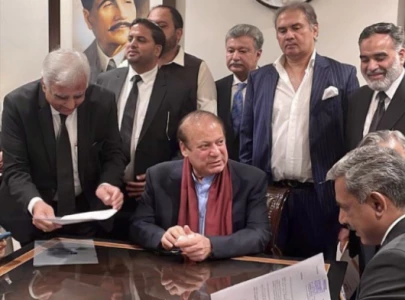
Out of all the problems we face as a country, energy seems to be the one that annoys us the most. It’s not that other issues are not important or are somehow less annoying; it is just that every single person in Pakistan uses energy in one form or another and hence is directly affected by it at a very personal level. So when a few days back I was invited as an expert delegate to the PML-N’s energy conference , I was pleasantly surprised that our political parties are beginning to showing signs of maturity and started talking issues. The ...
Read Full PostKnow your rights: Ilmpossible
Distracted by the political instability of the country, Pakistanis have failed to draw their attention to the termites that have been incessantly devouring the well being of the country. The crippled education system of Pakistan has proved to be one of these destructive creatures. Nevertheless, the presidential assent given to the Constitution (18th Amendment) Bill in April 2010 was an occurrence of great magnitude in this matter. What were the outcomes of the 18th Amendment? It turned Pakistan into a parliamentary republic; it removed the powers of the president to dissolve Parliament unilaterally. What else did it do to the constitution? ...
Read Full PostA department in ruin, a history forgotten
Punjab’s department of archaeology, recently devolved from the federation under the 19th Amendment to the Constitution, has had no operational legislation since April 8, 2011. As a result, no law to arrest any person caught scribbling, drawing or causing harm to a monument of historical importance exists. Similar is the case with the environment protection department. Field officers and inspectors issuing notices, sealing and fining owners of pollution-causing units, have reverted to Punjab Local Government Ordinance (PLGO) of 2001. The Antiquities Act 1975 and the Environment Pakistan Protection Act 1997 are both redundant. Officers of both departments have drafted legislation to replace ...
Read Full PostThe Supreme Court can do better
The whole nation looks to the honourable Supreme Court as the last resort for provision of justice and redressal of longstanding grievances. Ordinarily, legal cases pass through a long arduous process of litigation in lower courts, especially in civil matters, before they reach the Supreme Court for the last round of litigation. It is no secret that the lower judiciary, functioning under the direct supervision of district judges, is by and large, desperately inadequate in dealing with jurisdiction, legal rights, application of the law in its totality to given cases and conduct of evidence. Lacunas are left in orders and ...
Read Full PostDon’t devolve the HEC
The government’s plan to devolve the Higher Education Commission (HEC) to the provinces as a consequence of the 18th Amendment has come in for widespread criticism. The government’s justification is that since education already comes under the purview of the provinces, there is no contradiction in this planned measure. To that end, the chairman of the implementation committee of the 18th amendment, Senator Raza Rabbani, recently said that the ordinance which gave birth to the HEC would be redrafted and that all its powers save a few policy matters would be devolved to the provinces. He also said that the provinces would ...
Read Full PostSupreme Court legitimising future rule of Bilawals, Hamzas
For the last year and a half, the government and judiciary seem to be involved in a very exclusive ball game. From the NRO to the judges’ notification case, the government has remained the Supreme Court’s main concern. Members of the PPP have been reported for the infamous $60million, threatened with Article 6 and a few have been called to court. In retaliation, the government has reminded the judiciary of its limits, accused it of victimising a single party and even tested the waters by reminding the judges of the ‘reality’ of the executive order. As the tug of war between the country’s ...
Read Full PostMusharraf’s vain rhetoric
On October 1st the former president of Pakistan General (retd) Pervez Musharraf launched his political party ‘All Pakistan Muslim League’. According to him his 300,000 fans gave him the strength to return to Pakistan. Musharraf while talking to media apologized for his mistakes that he made in the last years of his rule. He launched his party in London, which on first instance gave an impression as he was planning to run his political business from overseas like a self-exiled MQM leader, Altaf Hussain. Musharraf asserted that due to threats to his life he couldn’t hold the launch in ...
Read Full PostFATA, overlooked, ignored
Sixty three years have gone by but Pakistan could neither bring FATA in the mainstream of the country, politically or constitutionally nor improved the life of common man there. Twenty first century’s innovations, permutations, novelties, upgraded lifestyle, scientific developments and many more have nothing to do with life of the people of tribal areas of Pakistan. They are living in the Stone Age with warfare, humiliations, lack of health and educational facilities. While the rest of the country looks to evolve human rights, the people of FATA are being ruled by archaic black law of FCR under which a common government ...
Read Full Post18th amendment: looking beyond the rhetoric
The media limelight apparently has shifted away from the 18th amendment bit too soon. While it had been the topic of heated discussions and talk shows, the getting over was quick. It was particularly surprising considering how PPP and PML(N) tried to score points after passing this amendment in the assembly and hailed it as a grand success and that how absolutely otherwise it was. Once we’re past the rhetoric, it is not too difficult to discern how the amendment brings us barely any good as a nation and how it sneaks back the clauses most detrimental to democracy ...
Read Full PostPunjab on education, setting the wrong example
The recent announcement by the government of Punjab to “privatize” 24 colleges has sadly been unable to garner the publicity it deserved. As part of the policy, a board of governors is to be constituted including the local district commissioner and National Assembly members. The implementation of this policy has been condemned by student, parent and teacher representatives. The government claims that on its part, it is appointing a board of governors to each of the respective colleges to make them more efficient. That said it has as yet, not offered any elaboration on what those efficiency gains may be. Paramount amongst the concerns ...
Read Full Post1-10 of 10